Museum of Indian Art and Culture, Santa Fe, New Mexico
Date Visited: June 26,2026
Location: Santa Fe, New Mexico
Type: Museum
Cost: $$
Difficulty: Easy
Time Required: 1-2 hours
Accessibility: Fully accessible
Dog Friendly: No
Best For: Art and History lovers, families
First Impressions
The Museum of Indian Arts & Culture sits on beautiful Museum Hill, one of Santa Fe’s best cultural destinations. Parking is plentiful and convenient, with both stairs and an elevator leading up to the plaza. The plaza itself is shared with the Museum of International Folk Art, the Museum Hill Café, and several other cultural institutions, making it easy to spend an entire day exploring the area.
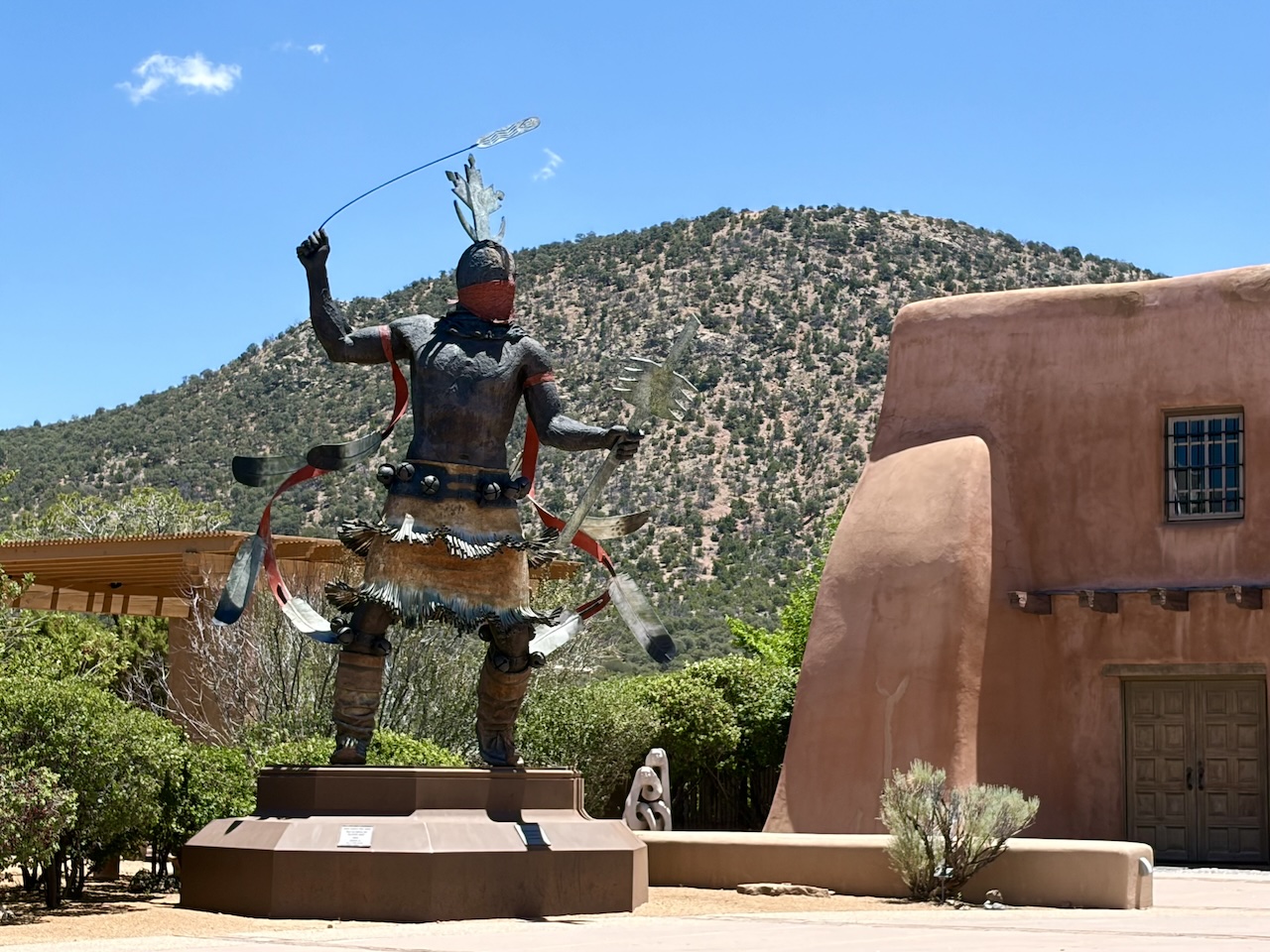
Before even entering the museum, visitors are greeted by a striking 24-foot sculpture of an Apache Mountain Spirit Dancer towering above the entrance, along with several other impressive outdoor sculptures. Inside, the staff at the front desk were warm and welcoming, and the museum shop is one of the best I’ve visited. It offers an outstanding selection of authentic Native American pottery, jewelry, rugs, books, clothing, and other handcrafted artwork.
What We Saw
I spent most of my visit in the Buchsbaum Gallery of Southwestern Pottery, which alone was worth the trip. The collection traces nearly a thousand years of Southwestern ceramics, from ancient McElmo Black-on-white dippers and Chaco corrugated jars to historic pottery produced after the arrival of the Spanish in 1598. One of my favorite sections explains the entire pottery-making process—from gathering clay and preparing pigments to hand-building vessels and firing them outdoors. For anyone interested in Southwestern pottery, it provides an excellent introduction.
The gallery also showcases work from many Pueblo traditions, including Hopi, Acoma, Santa Clara, Zuni, Zia, and others. Seeing famous potters such as Nampeyo of Hano represented alongside so many other artists helps illustrate both the continuity and diversity of Pueblo ceramic traditions. During my visit, a friendly docent was available to answer questions, and a video of Maria Martinez demonstrating her pottery-making techniques added another wonderful historical dimension.
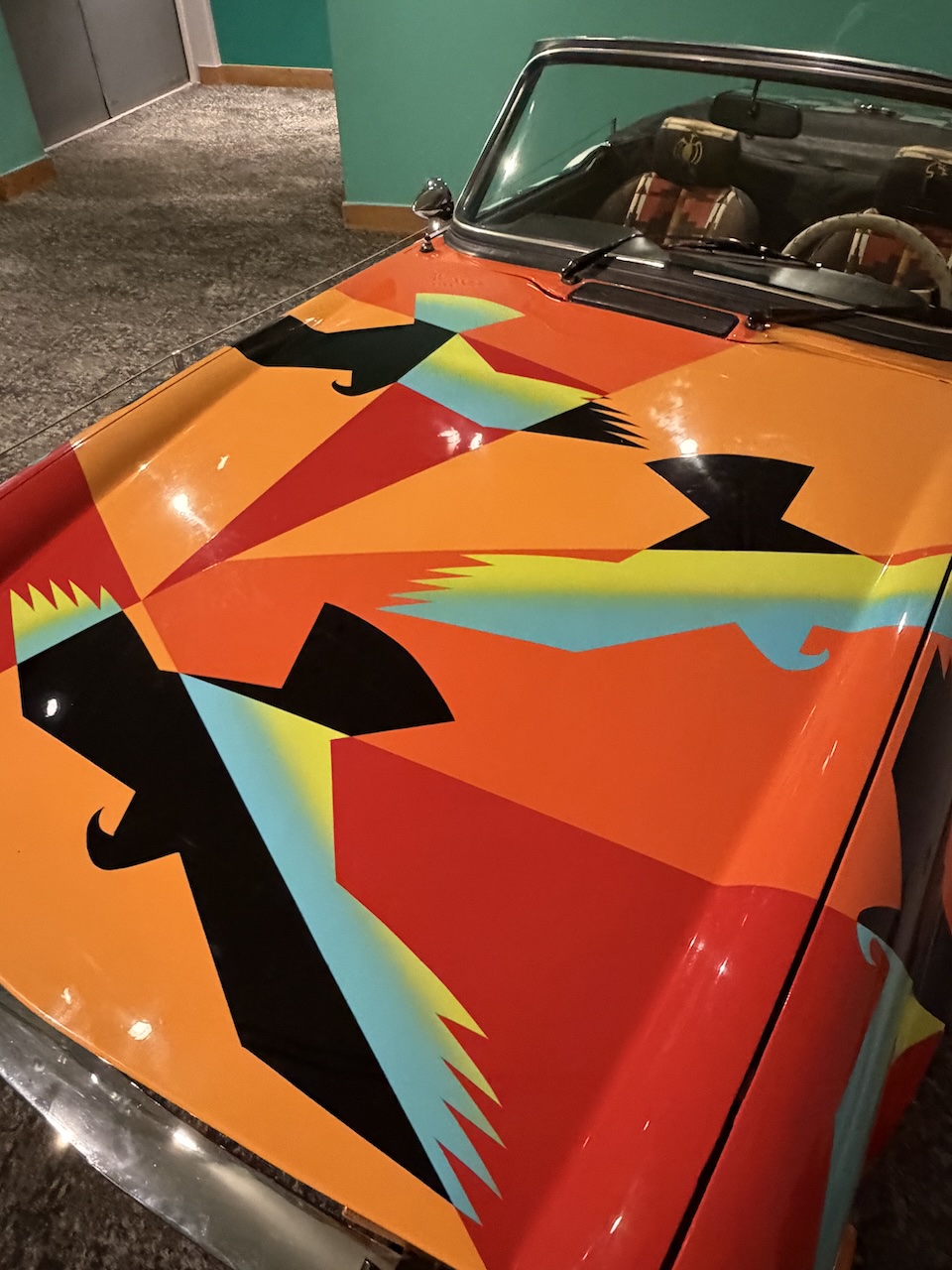
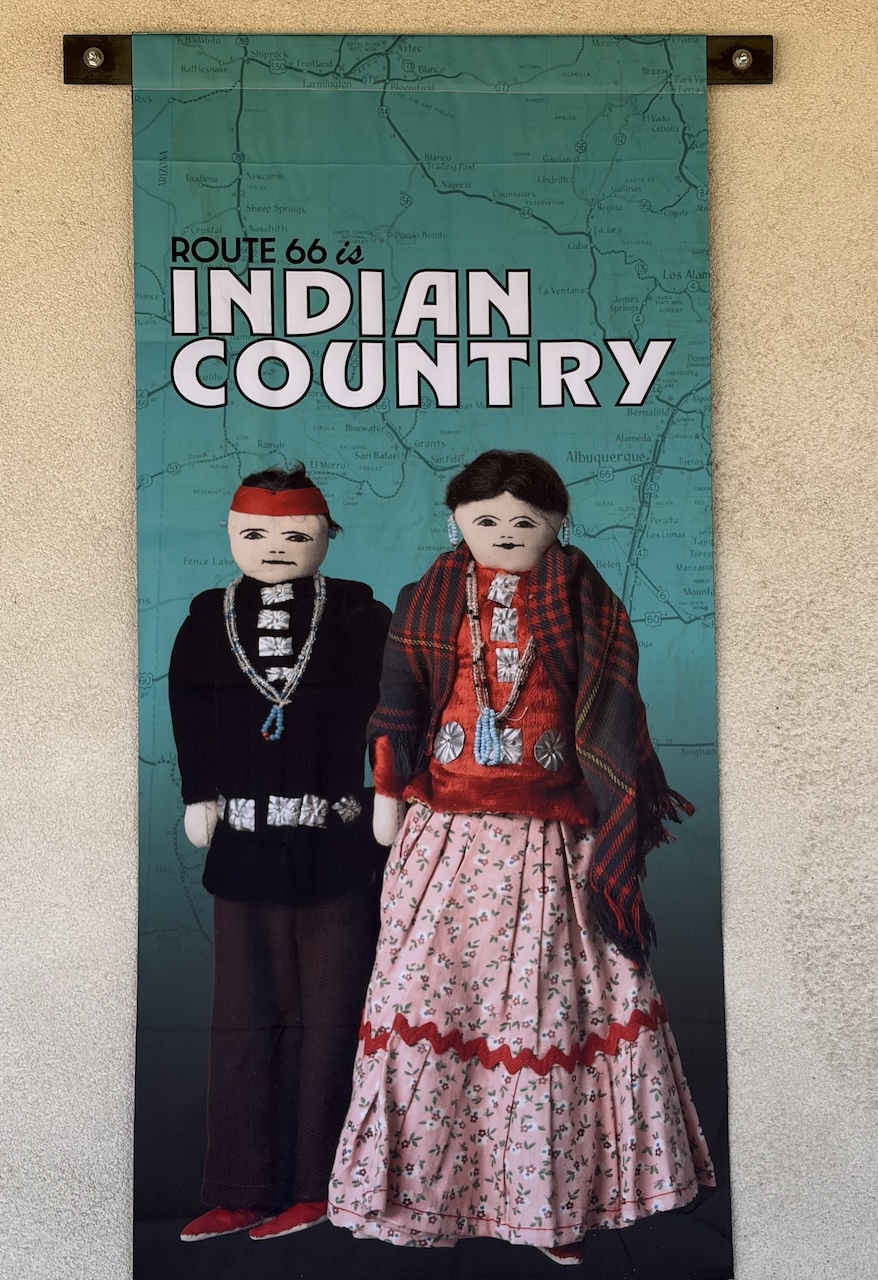
The museum’s other exhibits were equally engaging. Route 66: Connecting Through Culture explores the historic highway as it passes through Indian Country. A beautifully restored 1974 Triumph roadster, reimagined by Native American artists, is an unexpected highlight. Other exhibits included Stars and Stripes and First Americans, which examines Native interpretations of the American flag; Here, Now and Always, a wide-ranging introduction to Native history, art, and contemporary life; and Makowa: The Night Sky in Indigenous Art, a thoughtful exploration of the importance of the heavens in Native cultures. Each exhibit offered something different, making the museum feel much larger than its footprint suggests.
Good To Know
The museum also includes a well-equipped art studio for educational programs and a creative children’s area, making it welcoming for visitors of all ages.
My only minor criticism is that the restrooms were not well marked. I eventually found them on the lower level after a bit of wandering. There is an elevator providing access, although it wasn’t immediately obvious during my visit.
One pleasant surprise was how uncrowded the museum felt. At several points I had entire galleries to myself, allowing plenty of time to study the pottery without feeling rushed. Parking was easy, and the relaxed atmosphere made for a very enjoyable visit.
Would We Go Again?
Yes, absolutely. The Museum of Indian Arts & Culture offers a rich and engaging experience that showcases the vibrant history and traditions of Native American art. It's a must-visit for anyone interested in cultural heritage and artistic expression.
Worth The Drive? Absolutely
Best Feature: The extensive collection of Southwestern pottery
Watch Out For: Because of the museum's design, it can be easy to miss some of the smaller exhibits, get a map at the entrance
Overall Rating: ★★★★★